


Doruntina Golaj & Shpend Emini

Local finances are a critical pillar of effective governance at the municipal level. Fiscal autonomy enables municipalities to plan and manage resources in line with the priorities and needs of their citizens, directly contributing to the delivery of public services.
In Sweden, municipalities enjoy a high level of fiscal autonomy and have clearly defined competencies in managing public finances. While both in Kosovo and Sweden, municipalities are responsible for providing quality services to citizens, Swedish municipalities operate with significantly greater financial independence. Unlike in Kosovo, they secure their own budgets in cooperation with the Skatteverket (Swedish Tax Agency), without central government involvement. Municipal budgets are composed of own-source revenues such as income tax, property tax, and more, and municipalities actively participate in the planning and implementation of local development policies. This system is closely linked to well-structured mechanisms for fiscal equalization, oversight, and needs/performance evaluation. As a result, the central government finances municipalities through tools such as the General State Grant and the Equalization Grant. Additionally, through instruments like Stadsutvecklingsbidrag (Urban Development Grants) and Miljöbidrag (Environmental Grants), the Swedish government encourages municipalities to invest in priority areas such as sustainable construction, clean transport, and waste management — all while balancing national objectives with local needs. On the other hand, the Equalization Grant redistributes financial resources among municipalities to ensure a more uniform level of public services across the country, regardless of differences in territory, population, tax base, or service delivery costs.
To better understand this approach and observe how these mechanisms function in practice, a delegation from Kosovo visited Stockholm in June. The delegation included senior representatives from the Ministry of Local Government Administration, the Ministry of Finance, Labour and Transfers, municipal mayors and officials, the Association of Kosovo Municipalities, and donor representatives.
The goal of the visit was not to copy a model. As repeatedly emphasized in meetings with Swedish counterparts, models must first be understood and then adapted to local citizen needs. However, certain principles are still transferable: local autonomy, transparency, accountability, close cooperation between central government and municipalities through the Association of Municipalities, and strategic planning as a key to successful decentralization.
From the donors’ perspective, Saranda Cana from the Swiss Embassy in Kosovo shared her main take-aways:
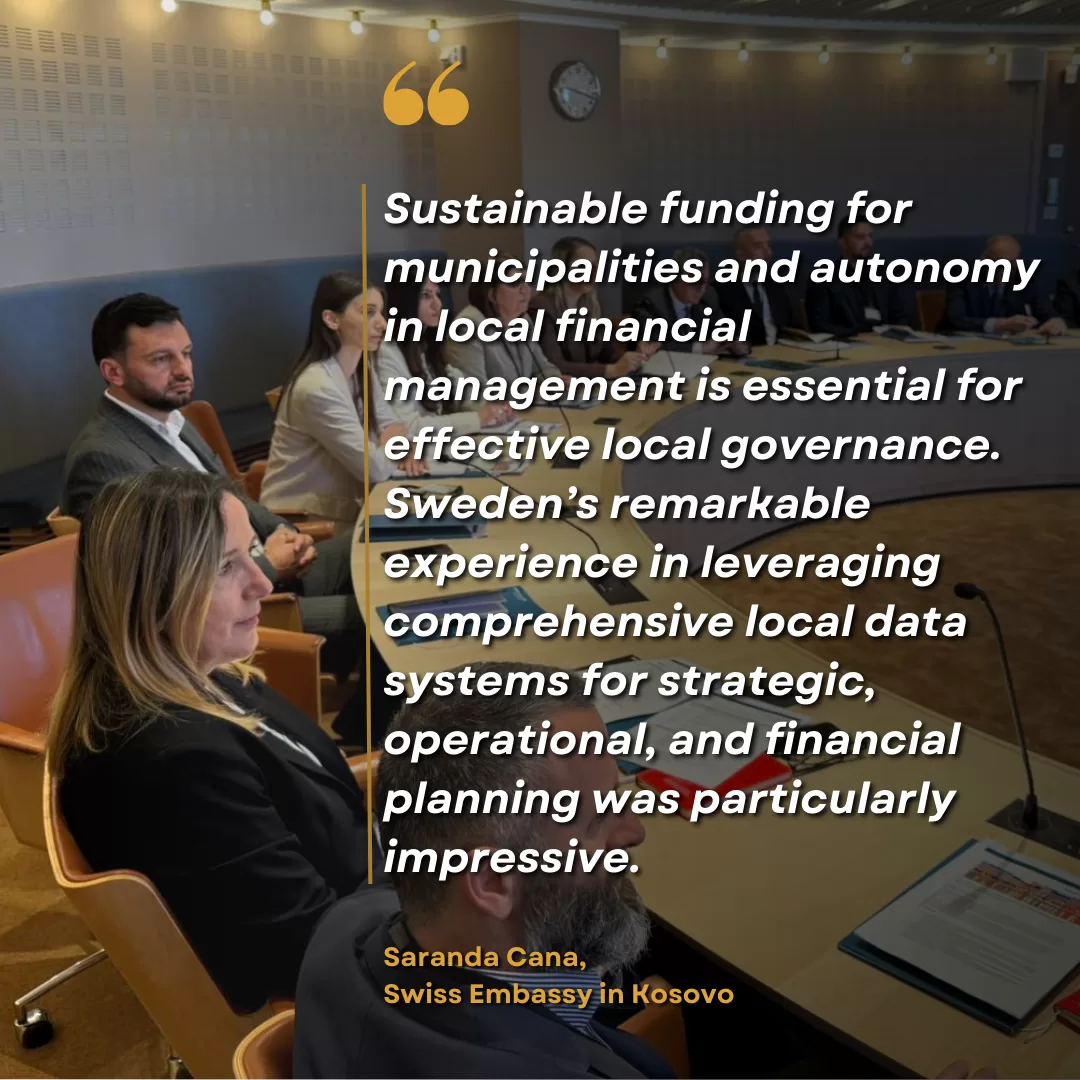
“The study tour in Sweden was very inspirational, underscoring that sustainable funding for municipalities and autonomy in local financial management is essential for effective local governance. In addition, Sweden’s remarkable experience in leveraging comprehensive local data systems for strategic, operational, and financial planning — ensuring transparency and accountability towards citizens and guiding intra-government grants and transfers — was particularly impressive,” she said.
Kreshnik Basha from the Swedish International Development Cooperation Agency emphasized:
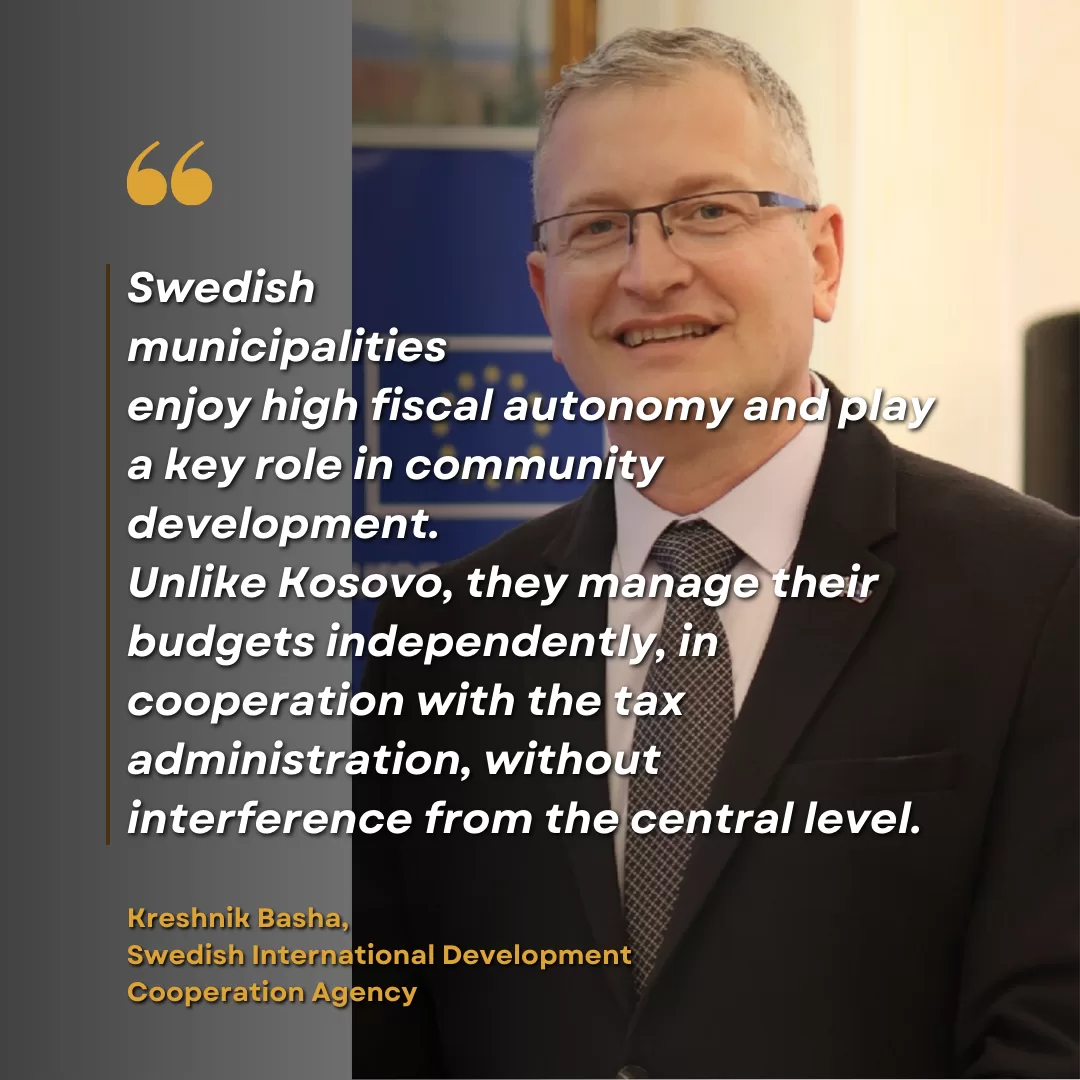
“During the study visit, representatives from Kosovo’s municipalities and relevant ministries had the chance to explore a functional model of local self-governance. Swedish municipalities enjoy high fiscal autonomy and play a key role in community development. Unlike in Kosovo, they manage their budgets independently, in cooperation with the tax administration, without central-level interference. This system allows them to implement policies that reflect local needs while maintaining alignment with national objectives through fiscal equalization mechanisms. This experience offers valuable lessons for strengthening our municipalities.”
For the participating municipalities, the Swedish experience was not merely theoretical. It generated new ideas for measuring the impact of local policies and for creating more citizen-friendly environments.
Shaqir Totaj, Mayor of Prizren, shared:
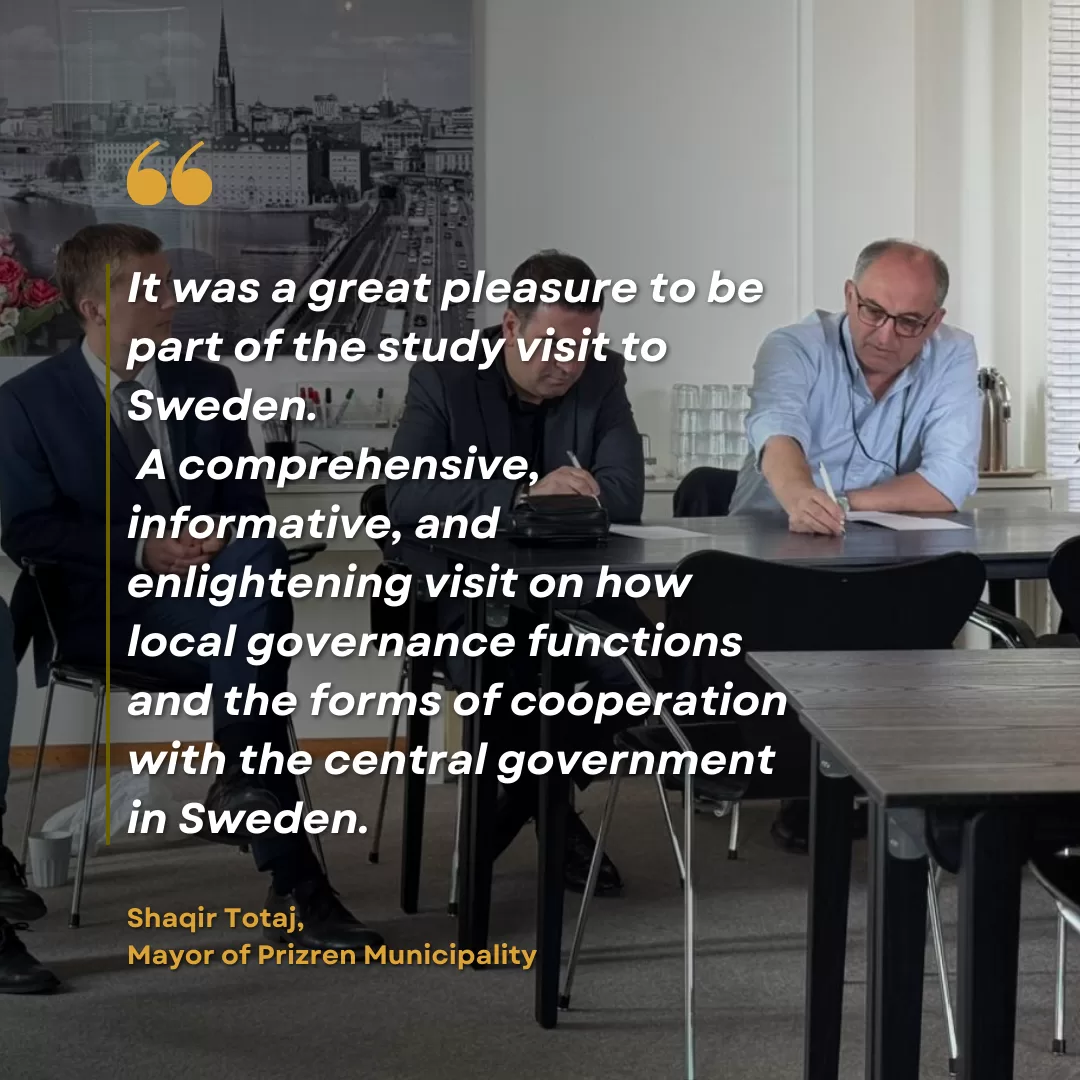
“It was a great pleasure to be part of the study visit to Sweden, a comprehensive, informative, and enlightening experience on how local government functions and collaborates with the central government. The organization was excellent, and the hospitality impressive. Participants shared knowledge, experiences, and support. Congratulations!”
Ardian Gjini, Mayor of Gjakova, added:
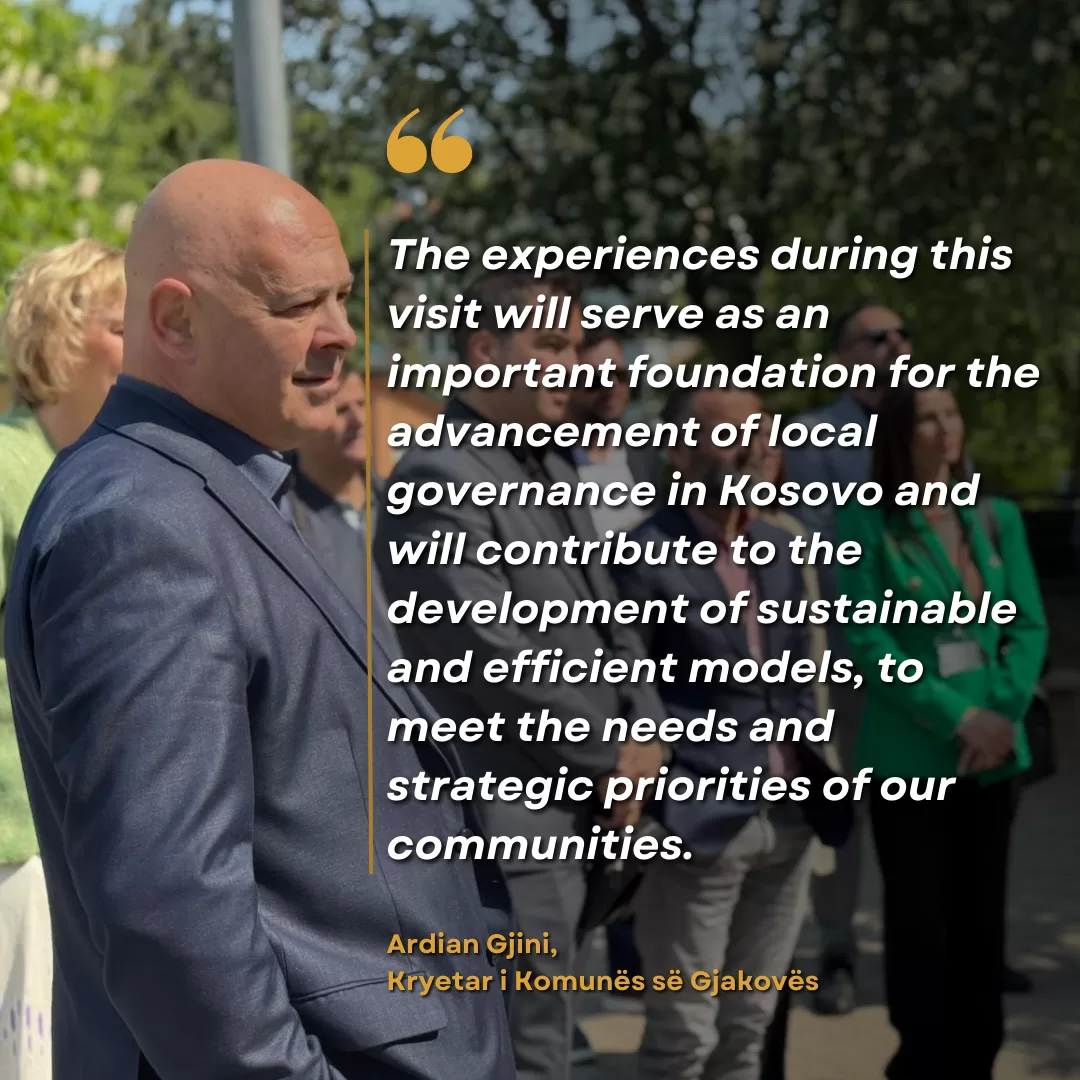
“The visit to Sweden represents a unique opportunity to learn about advanced practices in fiscal autonomy and inter-institutional cooperation at the local level. The experiences during this visit will serve as an important foundation for the advancement of local governance in Kosovo and will contribute to the development of sustainable and efficient models to meet the needs and strategic priorities of our communities.”
Since 2009, Kosovo has been a regional pioneer in adopting a municipal performance measurement scheme. In 2017, the Ministry of Local Government Administration and the Swiss Agency for Development and Cooperation (SDC) transformed this scheme into a performance-based financial incentive, known as the Municipal Performance Grant, which is now also supported by Sweden and the European Union. This mechanism supports the advancement of local democracy, better governance, and improved citizen services.
Additionally, the DEMOS project has supported the Ministry of Finance, Labour, and Transfers in developing the new Local Finance Law, a crucial step toward reforming the local finance system and addressing the challenges facing Kosovo’s municipalities.
Experiences like the Swedish study visit help reinforce efforts to advance local finance systems and strengthen local governance overall.
The DEMOS project is co-financed by the European Union, Switzerland, and Sweden.

